Call To The Bar 2024 | Ontario

Call To The Bar 2024 Dates

Prospective call to the bar 2024 candidates will be sent a call to the bar information bulletin in their online account 4 to 8 weeks prior to their call to the bar Ontario 2024.

Location Date Venue Time
       
Toronto Friday, March 1, 2024 Roy Thomson Hall 9:30 a.m.
London Friday, June 14, 2024 RBC Place London 2:30 p.m.
Ottawa Wednesday, June 19, 2024 Shaw Centre 10:00 a.m.
Toronto Monday, June 24, 2024 Roy Thomson Hall 9:30 a.m.
Toronto Monday, June 24, 2024 Roy Thomson Hall 2:30 p.m.
Toronto Thursday, June 27, 2024 Roy Thomson Hall 9:30 a.m.
Toronto Thursday, June 27, 2024 Roy Thomson Hall 2:30 p.m.

Call To The Bar Attendance

All eligible candidates must be in attendance for an in-person call to the bar ceremony. At the call, candidates are presented with the Degree of Barrister-at-Law by the Law Society and a Court Certificate of Qualification and are required to swear or affirm the oath required to practise law in Ontario. Candidates may also take an oath of allegiance which is optional.

Following the conclusion of the in-person call, the newly called members of the Ontario Bar are entitled to practise law in Ontario, subject to the rules and regulations set out and enforced by the Law Society in its regulatory role, to ensure the competence of the profession.

Candidates who are being administratively called are not required to attend in person and do not have a ceremony component to the call process. Instead, all requirements and forms will be sent to those candidates through their online account and are expected to be filed with Licensing and Accreditation electronically by the required deadline.

Once the required call documents are submitted by the candidate, Licensing and Accreditation staff will review these documents and the candidate’s file in order to verify and process the information. During peak licensing periods, this may take three to six weeks to complete from the time a candidate submits their call documents.

Once licensed, administratively called candidates will be notified through their online account  that they have been licensed and can commence practising Ontario law, subject to the rules and regulations set out and enforced by the Law Society of Ontario.

Once notified of their licensure, candidates may still practise once they obtain their licensee number from the public directory, even if they have not yet received their printed certificate.

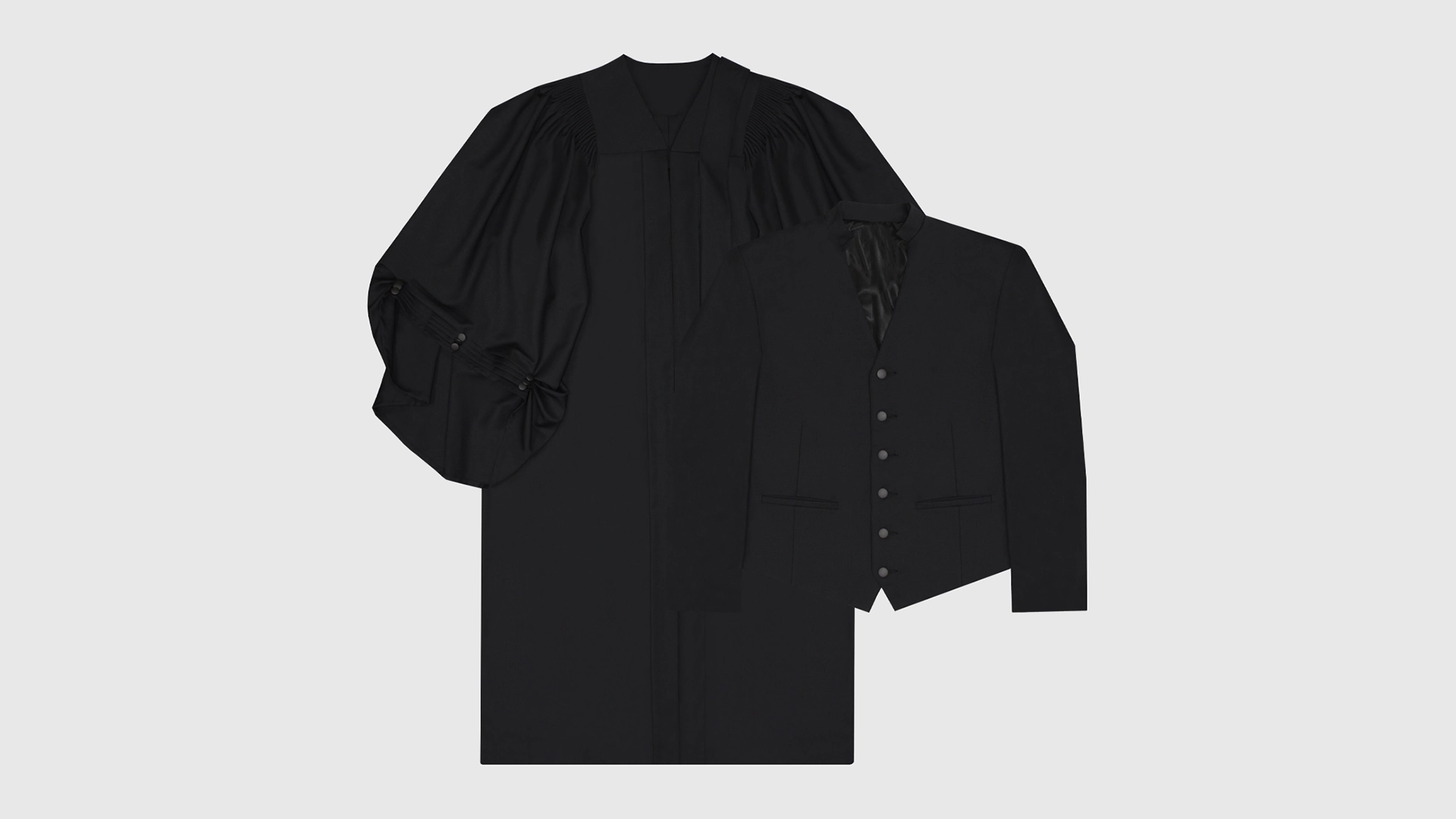
CALL TO THE BAR PACKAGES NOW AVAILABLE

MEN WOMEN

What Do Lawyers Wear In Canada?

The dress code for lawyers in Canada generally adheres to formal business attire. Here are some common expectations for lawyers’ attire in different settings:

  1. Court Appearance:

    • Lawyers: When appearing in court, lawyers typically wear formal business attire. This includes a dark-colored suit (navy, black, or gray), a dress shirt, and a tie for men. Women may opt for a tailored pantsuit, skirt suit, or a professional dress. The style may vary, but conservative and professional choices are standard.

    • Robes: In some court settings, lawyers may wear robes, especially in more formal proceedings. The style and color of robes can vary by province or territory.

  2. Law Firm and Corporate Settings:

    • Lawyers: In law firms and corporate legal departments, lawyers often follow a business professional dress code. This typically includes suits for both men and women. Conservative and neutral colors are preferred.

    • Accessories: Ties, scarves, and other accessories should be conservative and professional. Men are generally expected to wear a tie, and women may choose accessories that complement their attire without being overly flashy.

  3. Casual Fridays and Business Casual:

    • Some law firms and legal workplaces may have “Casual Fridays” or adopt a business casual dress code on certain days. In such cases, lawyers may have some flexibility in their attire, but professionalism should still be maintained.
  4. Client Meetings:

    • For client meetings, lawyers often choose attire that aligns with the formality of the occasion. While business professional is common, it may be adjusted based on the nature of the client relationship and the specific context.
  5. Legal Conferences and Networking Events:

    • Lawyers attending conferences, seminars, or networking events typically opt for business professional or business casual attire, depending on the event’s formality.

It’s essential to note that specific dress codes can vary between jurisdictions and individual workplaces. Additionally, evolving trends in professional attire may influence the expectations in different legal settings. It’s advisable for lawyers to be aware of any specific dress code policies established by their law firms, legal organizations, or the courts in which they practice. Always check for the most up-to-date guidelines and expectations in your particular jurisdiction.

Call To The Bar 2023 | Ontario

Call To The Bar 2023

Prospective call to the bar 2023 candidates will be sent a call to the bar information bulletin in their online account 4 to 8 weeks prior to their call to the bar Ontario 2023.

Location Date Venue Time
Toronto

Monday, March 6, 2023

Roy Thomson Hall

9:30 am
Ottawa

Wednesday June 14, 2023

Shaw Centre 10:00 am
London

Monday, June 19, 2023

RBC Place London 2:30 pm
Toronto

Friday, June 23, 2023

Roy Thomson Hall

9:30 am / 2:30 pm

Toronto

Tuesday, June 27, 2023

Roy Thomson Hall

9:30 am / 2:30 pm

Call To The Bar Attendance

All eligible candidates must be in attendance for an in-person call to the bar ceremony. At the call, candidates are presented with the Degree of Barrister-at-Law by the Law Society and a Court Certificate of Qualification and are required to swear or affirm the oath required to practise law in Ontario. Candidates may also take an oath of allegiance which is optional.

Following the conclusion of the in-person call, the newly called members of the Ontario Bar are entitled to practise law in Ontario, subject to the rules and regulations set out and enforced by the Law Society in its regulatory role, to ensure the competence of the profession.

Candidates who are being administratively called are not required to attend in person and do not have a ceremony component to the call process. Instead, all requirements and forms will be sent to those candidates through their online account and are expected to be filed with Licensing and Accreditation electronically by the required deadline.

Once the required call documents are submitted by the candidate, Licensing and Accreditation staff will review these documents and the candidate’s file in order to verify and process the information. During peak licensing periods, this may take three to six weeks to complete from the time a candidate submits their call documents.

Once licensed, administratively called candidates will be notified through their online account  that they have been licensed and can commence practising Ontario law, subject to the rules and regulations set out and enforced by the Law Society of Ontario.

Once notified of their licensure, candidates may still practise once they obtain their licensee number from the public directory, even if they have not yet received their printed certificate.

CALL TO THE BAR PACKAGES NOW AVAILABLE

MEN WOMEN

Legal Attire In Early 2000’s

In the seventeenth century, it became customary for people in legal and judicial communities to wear legal attire. The styles put into place back then have persisted today with slight modifications. For example, collars and sleeves are no longer popularly worn like they were centuries ago but rather according to what is fashionable at any given time which was shown by monarchical taste within a specific era of history as well as society’s more general sense of fashion trends that change over time – all while still maintaining its original purpose: To appear professional during important meetings or events where respectability matters most. In Britain, judges and court clerks are required to wear black silk or stuff gowns over suits. These complex dress codes have existed for centuries in order to maintain a sense of decorum within the courtroom. There is a new fashion in the courtroom. Judges are wearing more black robes than they have since before their time became monotonous and procedural. The high court, district courts, or circuit courts all prescribe to some degree that judges wear them throughout proceedings for maximum effect on observers.

Judges are called to add or remove cuffs, scarves, mantles and hoods of varying color and fabric at different time. The colors denote what type of case the judge presides over red for criminal cases, black for civil suits, green in springtime when nature is beginning to grow again (as a symbol that life goes on), grey during winter months as it typically remains cold outside with little hope left after days pass without snow melting away

More frequently judges wear colored robes which represent the court they will be presiding over. Scarlet robes remain reserved only for ceremonial occasions such as high-court criminal trials held during winter because their meaning represents justice via blood spilled between two people who have committed murder so there’s no turning back from this. Judges often forgo their robes and wigs due to weather or other special circumstances, such as when they are hearing a case involving children. In court, barristers must wear black silk gowns with tie-wigs connected by bands of rank.

Wigs and robes are reserved for British judges. These men wear wigs while they preside in a courtroom setting, but solicitors and lower court officials do not need to worry about it because their main place of employment is out on the street. The job description may have changed over time since Justices of Peace now only exist as an honorific title conferred upon certain magistrates or senior members of the judiciary with limited powers; these positions were at one point occupied by people who wore special dress such as a wig when performing their duties, so there’s some evidence that this was once required legal attire before it became more ceremonial than anything else.

The Judicial Attire

During the fifteenth and sixteenth centuries, medieval European judicial attire was as varied as it is today. However, ecclesiastical costume history showed that there were some general similarities in basic legal attire between nations: such items might include a wide-brimmed black hat with tails to cover one’s head; long boots for riding (though not always); or even grand ducal robes when on circuit through other countries.Judges of the early modern period wore sleeved tunics, and over this, wide-sleeved pleated gowns or robes made from cloth, wool or silk. This garment was sometimes referred to as a supertunica; high judges might wear tabards instead.

Judges in medieval times often had no formal dress code so they typically found themselves wearing what were called “supertunicas”. These garments consisted primarily of long coats worn by monks that later became more popular for all kinds of official purposes such as judging sessions on court days. Sometimes these would be seen with sleeves but most often without them which meant you could see their undershirt underneath – similar to how some people today may need an extra layer during cold winter months. Judges used to wear closed mantles that cover the shoulders and a hood of matching fabric lined with miniver. Their ceremonial cloak was called an armelausa, which is also known as a manteau in France.

Despite the abundance of information on judicial attire, there was little uniformity in color. James Robinson Planché summarized this point well in his Cyclopædia of Costume: “Unfortunately, descriptions are not so clear as they are copious”. Royalty often took a liking to dressing judges in elaborately decorated garments. Colors were used as a way of representing rank, and scarlet reds would be reserved for presiding judges while lower ranking officials wore the less ostentatious hues like pink or violets. The Justices of the Peace were in a constant fight with those that would break the king’s laws. They often wore legal attire, which was appropriate for their middle-class rank and class to make sure they could blend into any village or town without being noticed right away as an outsider.

The head always needs to be covered, and in early modern times it was common for judges to wear a coif along with other articles of clothing that signified their status as educated members of society. The judge’s attire could include white lawn or silk caps on the top of his/her head which resembled academic dress worn by those who possessed doctorate degrees at this time period. The Order of the Coif was a group who ranked as “high-ranking” and were in charge of appointing judges across Europe. Judges often wore hats on top their caps, so they would not lose it during court proceedings.

Seventeenth Century Legal Attire

From the days of Henry VII to Elizabeth I, monarchs set out complex dictates on judicial and legal attire that reflected their individual tastes. By the seventeenth century, as countries continued centralizing and codifying legal order in a world without intercontinental communication or travel for most people who were not nobility themselves it became important to systemize customs relating to judges’ clothing so they would be uniform across many different cultures. France has always been very specific about how its lawyers dress. In 1602, France regulated the color of their judges’ robes and even made distinctions for seasons.

Britain was not the only country with confusing and complicated laws. The 1635 Decree by Westminster made a decree that all judges must wear robes from spring to mid-autumn, which were lined in silk or fur. They had deep cuffs on them as well as matching hoods and mantles for warmth since it can get cold during those months. It is interesting to note that the judges’ dress was not unified. The judge’s legal attire consisted of a coif, cap and cornered hat in winter months with taffeta lining or miniver during summer. Special scarlet attire replaced this standard clothing on holy days for priests who wore these garments most often as they were usually required to wear black day-to-day unless specified otherwise by an upcoming ceremony such as Maundy Thursday which calls for white robes. A more specific code governing barristers did exist at this time but it differed from those worn by court judges despite being contemporaries in terms of historical significance (perhaps because their duties would differ).

In the early 1700s, Britain ruled over a vast empire. As they were colonizing America, it was important to their mindset that settlers followed codes and ceremonies of British law. Accordingly, scarlet robes became de rigueur for colonial judges because this color had been used in ceremonial fashion before by wealthy citizens and so these same people could be easily identified as members of higher society when wearing them while on trial or presiding at judicial proceedings. The American colonists did not enjoy the same level of creativity in dress as their British counterparts because they had to endure a puritan and austere lifestyle.

Why Judges Wear Black Legal Attire

Free use of color in judicial legal attire lasted until the late seventeenth century, when black robes became more popular. In 1694, Queen Mary II of Great Britain died and the British mourned by adopting black as their color. In response to this tradition, France adopted black for its judges in 1789 with a similar goal: mourning the death of Louis XVI, bringing together two nations united through tragedy. Thus, by the eighteenth century judges in America were also donning wigs as a symbol of liberty from British control over colonies.

The most unique aspect of French courtroom attire is the manteau, which can be traced back to 14th century France. This long robe was originally made from either black wool or silk and worn with a belt to cinch it around the waist so that it did not drag on the ground as they walked. Over time, however, members of Parliament were given permission by King Louis XIV in 1673 to wear fur-lined robes instead – an event described today as one “of significant symbolic importance.

In contrast with Britain’s legal system where everyone must adhere strictly under their guidelines for court dress code, even if you’re just there observing. High-court judges are required to wear scarlet robes, but lower-court justices can choose between black and red for their robe. Unlike the British or American counterparts of high court justice dresses, these buttons down the front of a long train that extends out from behind them. French court advocates still wear black toques, even though they are allowed to dress in business attire. Black robes also represent the judges on trial courts and their fellow lower-court judicial counterparts as well when those trials occur inside a courtroom setting. Court clerks often don similar outfits of French attorneys depending on how formal or informal the proceedings may be at hand for that specific day in question.

Traditionally, European countries have had their own dress codes for judges presiding in court. However, this has changed with the emergence of the ECJ and its uniformity among member states. Today when lawyers or advocates present at courts within any EU country they are required to wear a formal costume that reflects their national tradition; robes from one’s home state often incorporate colors such as red and blue which match those worn by other local officials including police officers.

Since Europe is an ever-changing region where judicial systems adapt to adjust for modern needs there was once no standardization across borders. Foreigners who visited different regions would notice differences in not only clothing but also language spoken—these cultural nuances were what first distinguished each area on maps long before political boundaries.

In the United States, judges wear long black robes that cover their entire body. They are not allowed to show any skin and must keep a formal appearance at all times while on duty. Court clerks have a lot of freedom in how they present themselves while on the job. For example, for court appearances justices of peace are now largely succeeded in authority by organized lower-level courts and wear legal attire as well.

Legal Attire Early Modern Period

Legal and judicial attire is primarily based on the history of royalty. In ancient times, monks were responsible for administering justice in European territories; however by the 15th century that responsibility shifted to lesser nobility appointed by sovereigns. As direct servants of monarchies, these nobles often wore robes with embroidered borders as a signifier of their status – which can be seen today when judges wear long black gowns trimmed in gold fabric bearing different patterns depending upon rank or jurisdiction

The origins behind legal and judicial attire are rooted firmly within royal history. Prior to early modern Europe’s transition from ecclesiastical administration over justice systems through Christian monasteries to secular rule via appointment office holders including lower nobility.

Until the late medieval period, judges were considered servants of their monarch and they wore clothing that would differentiate them from other members of society. These styles also served to visually represent the legitimacy of sovereign rule. For instance, early judicial dress borrowed heavily from church law enforcement’s style with modifications reflective in light on this new era defined by royal power as opposed to religious authority.

Legal Attire Modernization

In the United States, judges are allowed to wear anything that they want as long as it is professional. In Europe and other countries around the world, this isn’t always true. Judges have been given more freedom in recent years about what type of clothing they can wear. Judges used to be required by law or court rules to dress a certain way when presiding over cases but now many different types of legal attire are acceptable for them depending on their preference if not prohibited outright. Judges in Britain have made the decision to dispense with wigs and robes upon certain situations when they want to convey a feeling of equality toward laypersons, and Muslim and Sikh judges wear their turbans instead of wigs. In 1999, a time when the U.S. was in turmoil due to President William Jefferson Clinton’s impeachment trial and American Supreme Court Justice, Rehnquist wore gold stripes on his robes while fellow judge Byron Jonson chose blue instead of black as an individual means of personal expression during this period of uncertainty for America.

Modernization has also included the exercise by individuals within judicial systems all over the world have exercised their own tastes. Throughout history with mixed results typically related to culture-specific customs or protocols that may not be appropriate everywhere else, such as wearing different colored robes than what is normally seen in other areas where they reside based upon either cultural preferences or just simply because it gives them something unique about themselves. This reflects who they are inside outwards through clothing alone.

What is the significance of judicial and legal attire in today’s society? For many, it symbolizes a time when people were oppressed by unjust laws. But for others, they represent lawyers who are taking part in their communities through social justice issues such as homelessness or education access. In recent years there has been an increased discussion on how judges should appear before court proceedings. There have been instances where justices refused to wear robes because they felt that being dressed up was unnecessary considering what they do all day at the office – which can be anything from doing this writing to reading briefs filed with them and sitting down for oral arguments about different cases involving citizens’ rights violations like discrimination based on race or gender identity. Personal injury due to faulty products including negligence resulting In 1992, the judicial system in Britain debated how to be more relevant and modern. One of their ideas was changing legal attire – specifically wigs were abolished from courtrooms ten years ago but are still worn by judges today.

In addition to being a visual guide for members of the legal profession, judges and barristers in their traditional occupational dress reminds society about the dignity and gravity of law as well as impartiality. It also acts like an invisibility cloak when they are outside of courtrooms so that they can protect themselves from danger. Judicial attire is one of many burning issues in the court system. Not only are these clothes cumbersome, they also make it difficult to address cases quickly and efficiently. Some say that we should disband with such formalities; others suggest a more relaxed approach for today’s society where people don’t want their government looking too stuffy or traditionalistic. These discussions have been going on for centuries and will probably continue as long as there is an institution called “government.”Judicial attire has always been something debated among legal officials who try to balance tradition with modernity wherever possible while still maintaining justice at its core – whatever form this may take.

The Early Legal Attire

Early legal attire for lawyers, also known as barristers, solicitors, advocates or councillors depending on the country bore strong similarities to that of judges. During the Middle Ages lawyers were considered apprentices to judiciary which explain their likeness in dress like their judicial counterparts Barristers in Britain wore closed gowns made of cloth or silk. These garments had raised, stuffed shoulders and elbow-length glove sleeves. Queen Mary’s death only made matters worse as these gowns were predominantly black before then due to the Inns of Court that organized barrister education and membership rules.

The barristers of the day wore strikingly similar attire to that worn by judges, with their coifs and skullcaps. They also had white ruff-like neck bands around them as well. The solicitors who were not able to present in court often would wear long black gowns which resembled those wings seen all overcoats today. French advocates were conspicuous for their wide, colorful gowns. They wore these skirts in a variety of colors like red and white while also wearing stiff black bonnets carrés called hats.