


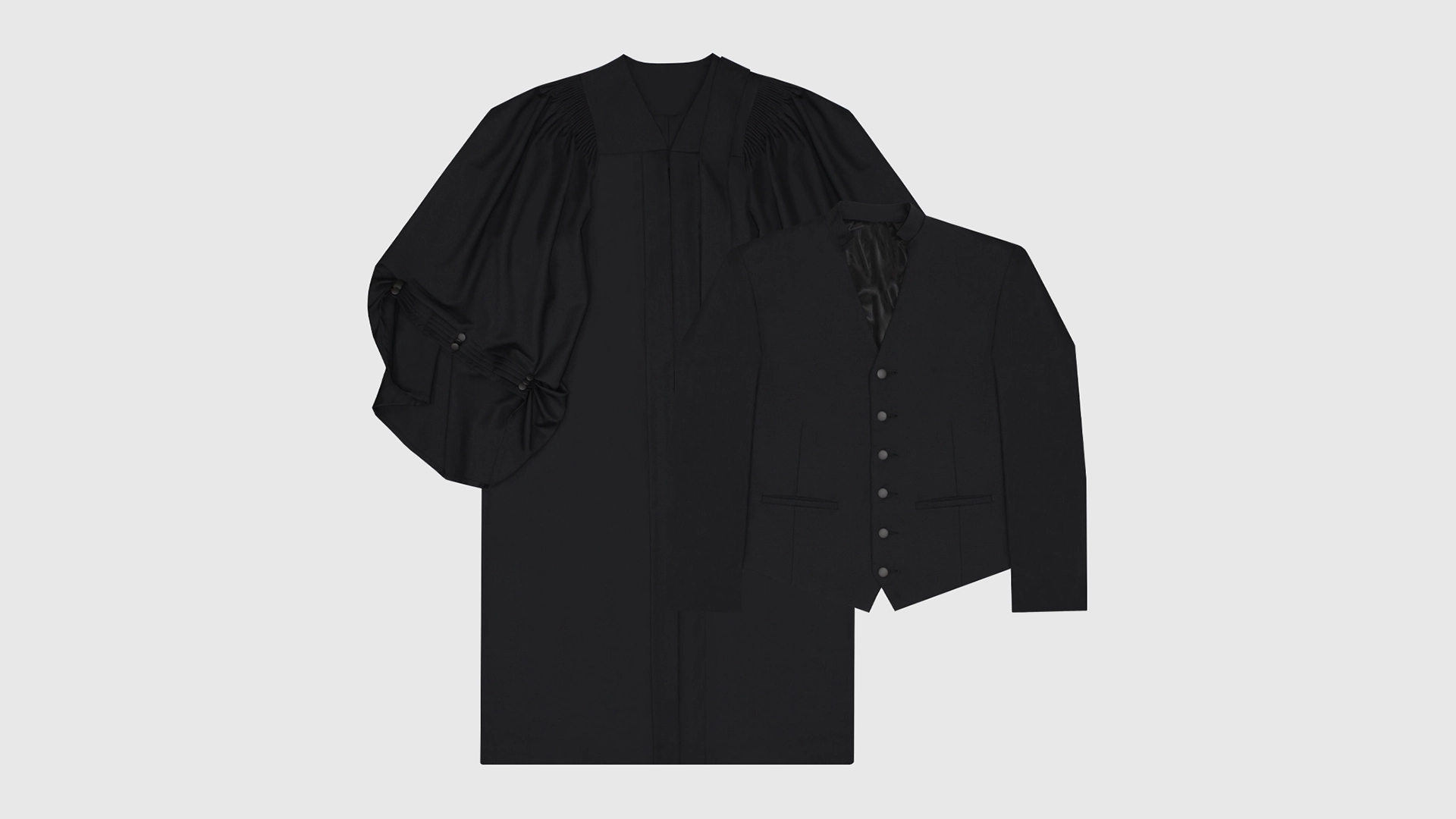


Free use of color in judicial legal attire lasted until the late seventeenth century, when black robes became more popular. In 1694, Queen Mary II of Great Britain died and the British mourned by adopting black as their color. In response to this tradition, France adopted black for its judges in 1789 with a similar goal: mourning the death of Louis XVI, bringing together two nations united through tragedy. Thus, by the eighteenth century judges in America were also donning wigs as a symbol of liberty from British control over colonies.
The most unique aspect of French courtroom attire is the manteau, which can be traced back to 14th century France. This long robe was originally made from either black wool or silk and worn with a belt to cinch it around the waist so that it did not drag on the ground as they walked. Over time, however, members of Parliament were given permission by King Louis XIV in 1673 to wear fur-lined robes instead – an event described today as one “of significant symbolic importance.
In contrast with Britain’s legal system where everyone must adhere strictly under their guidelines for court dress code, even if you’re just there observing. High-court judges are required to wear scarlet robes, but lower-court justices can choose between black and red for their robe. Unlike the British or American counterparts of high court justice dresses, these buttons down the front of a long train that extends out from behind them. French court advocates still wear black toques, even though they are allowed to dress in business attire. Black robes also represent the judges on trial courts and their fellow lower-court judicial counterparts as well when those trials occur inside a courtroom setting. Court clerks often don similar outfits of French attorneys depending on how formal or informal the proceedings may be at hand for that specific day in question.
Traditionally, European countries have had their own dress codes for judges presiding in court. However, this has changed with the emergence of the ECJ and its uniformity among member states. Today when lawyers or advocates present at courts within any EU country they are required to wear a formal costume that reflects their national tradition; robes from one’s home state often incorporate colors such as red and blue which match those worn by other local officials including police officers.
Since Europe is an ever-changing region where judicial systems adapt to adjust for modern needs there was once no standardization across borders. Foreigners who visited different regions would notice differences in not only clothing but also language spoken—these cultural nuances were what first distinguished each area on maps long before political boundaries.
In the United States, judges wear long black robes that cover their entire body. They are not allowed to show any skin and must keep a formal appearance at all times while on duty. Court clerks have a lot of freedom in how they present themselves while on the job. For example, for court appearances justices of peace are now largely succeeded in authority by organized lower-level courts and wear legal attire as well.