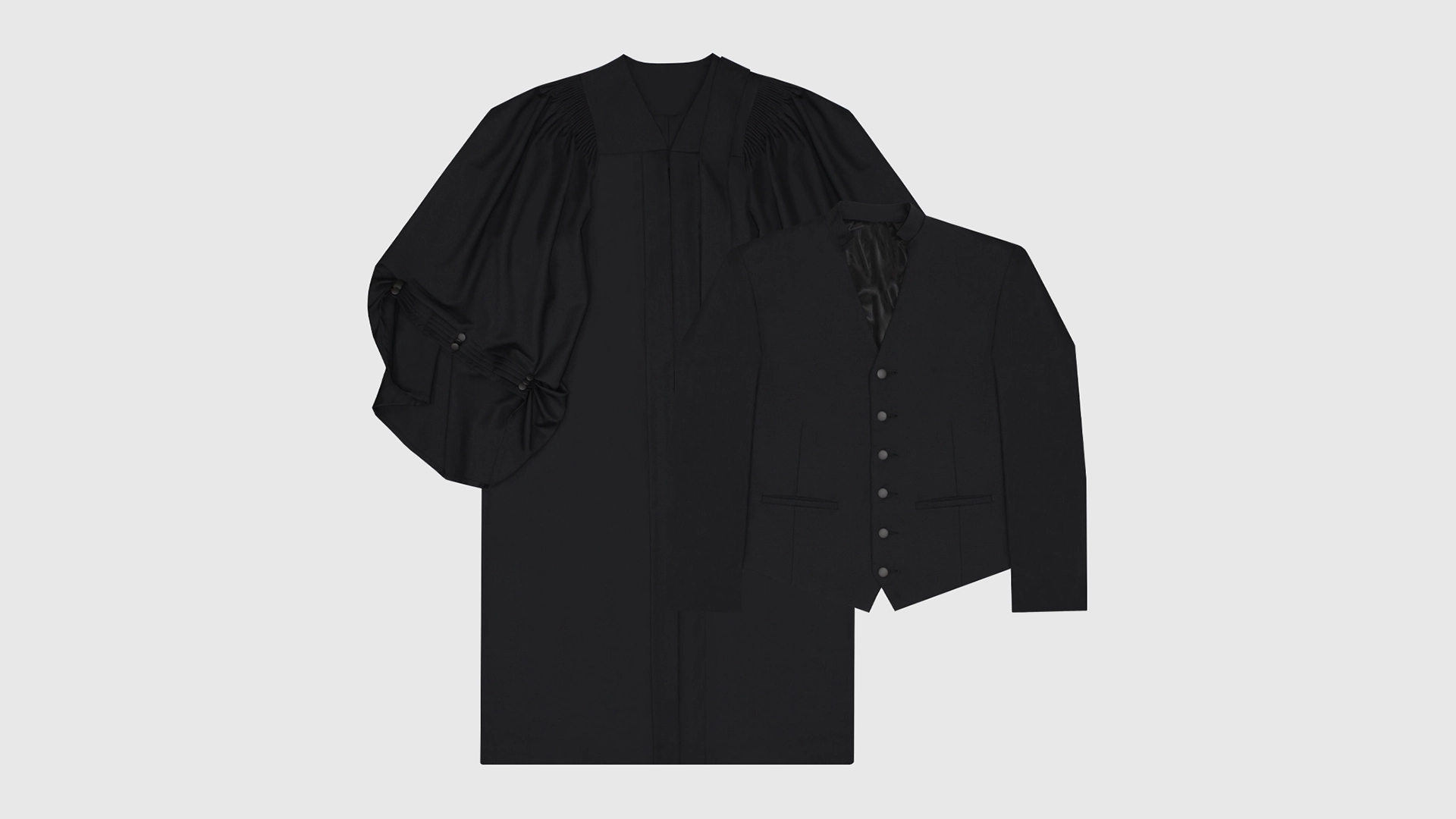
Legal Attire In British Columbia

Students must complete the Law Society Admission Program satisfactorily before applying for call and admission to the Bar.  At least 30 days before their anticipated licence date, students must submit an application package for call and admission which includes:

  • Petition for Call and Admission
  • Declarations of Principles and Applicants
  • Joint Final Report signed by both the student and principal
  • An indemnity or non-practising membership application
  • Completed Fee Option sheet and applicable payment

After completion of all requirements for call and admission and approval of appropriate documentation, the student must take the barristers and solicitors oath prior to becoming eligible for practice.

Transfers

Lawyers transferring to BC must complete the transfer process. To be called and admitted in BC, a transfer candidate must either:

  • Attend a call ceremony and be presented in open court; or
  • Before beginning the practice of law, take the barristers and solicitors oath before a judge or a practising lawyer.

A candidate opting to take the oath before a judge or practising lawyer will not be entitled to renew his or her practising certificate until after having attended a call ceremony.

Call to the bar ceremonies 

New lawyers must be presented to the court in a call and admission ceremony, although they do not need to attend that ceremony prior to issuance of their practising certificate. Presentation to the court is required, however, before the first renewal of a certificate (i.e., before the end of the calendar year in which the new lawyer qualifies for call and admission).

As an exception, if a new lawyer qualifies for the first time in the last four months of the calendar year, the new lawyer may have his or her certificate renewed once without presentation in court. The lawyer must be presented to the court before the end of the calendar year after the one in which he or she qualifies for call and admission.

When a new lawyer applies for call and admission he or she will be informed of the options available for presentation to the court.

Approximately 30 days before a call ceremony, eligible candidates will receive a confirmation email with the ceremony details, schedule and instructions for the day. This email also includes information about obtaining robes.

Vancouver call ceremonies are held 4 times a year in the Great Hall at the Vancouver Law Courts. Customarily, there is one ceremony in the morning and one held in the afternoon.

British Columbia Call To The Bar Packages

Men Women

Why Judges Wear Black Legal Attire

Free use of color in judicial legal attire lasted until the late seventeenth century, when black robes became more popular. In 1694, Queen Mary II of Great Britain died and the British mourned by adopting black as their color. In response to this tradition, France adopted black for its judges in 1789 with a similar goal: mourning the death of Louis XVI, bringing together two nations united through tragedy. Thus, by the eighteenth century judges in America were also donning wigs as a symbol of liberty from British control over colonies.

The most unique aspect of French courtroom attire is the manteau, which can be traced back to 14th century France. This long robe was originally made from either black wool or silk and worn with a belt to cinch it around the waist so that it did not drag on the ground as they walked. Over time, however, members of Parliament were given permission by King Louis XIV in 1673 to wear fur-lined robes instead – an event described today as one “of significant symbolic importance.

In contrast with Britain’s legal system where everyone must adhere strictly under their guidelines for court dress code, even if you’re just there observing. High-court judges are required to wear scarlet robes, but lower-court justices can choose between black and red for their robe. Unlike the British or American counterparts of high court justice dresses, these buttons down the front of a long train that extends out from behind them. French court advocates still wear black toques, even though they are allowed to dress in business attire. Black robes also represent the judges on trial courts and their fellow lower-court judicial counterparts as well when those trials occur inside a courtroom setting. Court clerks often don similar outfits of French attorneys depending on how formal or informal the proceedings may be at hand for that specific day in question.

Traditionally, European countries have had their own dress codes for judges presiding in court. However, this has changed with the emergence of the ECJ and its uniformity among member states. Today when lawyers or advocates present at courts within any EU country they are required to wear a formal costume that reflects their national tradition; robes from one’s home state often incorporate colors such as red and blue which match those worn by other local officials including police officers.

Since Europe is an ever-changing region where judicial systems adapt to adjust for modern needs there was once no standardization across borders. Foreigners who visited different regions would notice differences in not only clothing but also language spoken—these cultural nuances were what first distinguished each area on maps long before political boundaries.

In the United States, judges wear long black robes that cover their entire body. They are not allowed to show any skin and must keep a formal appearance at all times while on duty. Court clerks have a lot of freedom in how they present themselves while on the job. For example, for court appearances justices of peace are now largely succeeded in authority by organized lower-level courts and wear legal attire as well.

Legal Attire Early Modern Period

Legal and judicial attire is primarily based on the history of royalty. In ancient times, monks were responsible for administering justice in European territories; however by the 15th century that responsibility shifted to lesser nobility appointed by sovereigns. As direct servants of monarchies, these nobles often wore robes with embroidered borders as a signifier of their status – which can be seen today when judges wear long black gowns trimmed in gold fabric bearing different patterns depending upon rank or jurisdiction

The origins behind legal and judicial attire are rooted firmly within royal history. Prior to early modern Europe’s transition from ecclesiastical administration over justice systems through Christian monasteries to secular rule via appointment office holders including lower nobility.

Until the late medieval period, judges were considered servants of their monarch and they wore clothing that would differentiate them from other members of society. These styles also served to visually represent the legitimacy of sovereign rule. For instance, early judicial dress borrowed heavily from church law enforcement’s style with modifications reflective in light on this new era defined by royal power as opposed to religious authority.

Legal Attire Modernization

In the United States, judges are allowed to wear anything that they want as long as it is professional. In Europe and other countries around the world, this isn’t always true. Judges have been given more freedom in recent years about what type of clothing they can wear. Judges used to be required by law or court rules to dress a certain way when presiding over cases but now many different types of legal attire are acceptable for them depending on their preference if not prohibited outright. Judges in Britain have made the decision to dispense with wigs and robes upon certain situations when they want to convey a feeling of equality toward laypersons, and Muslim and Sikh judges wear their turbans instead of wigs. In 1999, a time when the U.S. was in turmoil due to President William Jefferson Clinton’s impeachment trial and American Supreme Court Justice, Rehnquist wore gold stripes on his robes while fellow judge Byron Jonson chose blue instead of black as an individual means of personal expression during this period of uncertainty for America.

Modernization has also included the exercise by individuals within judicial systems all over the world have exercised their own tastes. Throughout history with mixed results typically related to culture-specific customs or protocols that may not be appropriate everywhere else, such as wearing different colored robes than what is normally seen in other areas where they reside based upon either cultural preferences or just simply because it gives them something unique about themselves. This reflects who they are inside outwards through clothing alone.

What is the significance of judicial and legal attire in today’s society? For many, it symbolizes a time when people were oppressed by unjust laws. But for others, they represent lawyers who are taking part in their communities through social justice issues such as homelessness or education access. In recent years there has been an increased discussion on how judges should appear before court proceedings. There have been instances where justices refused to wear robes because they felt that being dressed up was unnecessary considering what they do all day at the office – which can be anything from doing this writing to reading briefs filed with them and sitting down for oral arguments about different cases involving citizens’ rights violations like discrimination based on race or gender identity. Personal injury due to faulty products including negligence resulting In 1992, the judicial system in Britain debated how to be more relevant and modern. One of their ideas was changing legal attire – specifically wigs were abolished from courtrooms ten years ago but are still worn by judges today.

In addition to being a visual guide for members of the legal profession, judges and barristers in their traditional occupational dress reminds society about the dignity and gravity of law as well as impartiality. It also acts like an invisibility cloak when they are outside of courtrooms so that they can protect themselves from danger. Judicial attire is one of many burning issues in the court system. Not only are these clothes cumbersome, they also make it difficult to address cases quickly and efficiently. Some say that we should disband with such formalities; others suggest a more relaxed approach for today’s society where people don’t want their government looking too stuffy or traditionalistic. These discussions have been going on for centuries and will probably continue as long as there is an institution called “government.”Judicial attire has always been something debated among legal officials who try to balance tradition with modernity wherever possible while still maintaining justice at its core – whatever form this may take.

The Early Legal Attire

Early legal attire for lawyers, also known as barristers, solicitors, advocates or councillors depending on the country bore strong similarities to that of judges. During the Middle Ages lawyers were considered apprentices to judiciary which explain their likeness in dress like their judicial counterparts Barristers in Britain wore closed gowns made of cloth or silk. These garments had raised, stuffed shoulders and elbow-length glove sleeves. Queen Mary’s death only made matters worse as these gowns were predominantly black before then due to the Inns of Court that organized barrister education and membership rules.

The barristers of the day wore strikingly similar attire to that worn by judges, with their coifs and skullcaps. They also had white ruff-like neck bands around them as well. The solicitors who were not able to present in court often would wear long black gowns which resembled those wings seen all overcoats today. French advocates were conspicuous for their wide, colorful gowns. They wore these skirts in a variety of colors like red and white while also wearing stiff black bonnets carrés called hats.

Required court apparel for call

Every candidate for call to the bar must appear before Convocation in full court apparel, which consists of:

Legal attire for men

Legal attire for women

Candidates are encouraged to make arrangements to either purchase or rent court apparel at least one and a half months before the call to ensure they will have full court apparel for the day of the ceremony.

The clothes worn to the call to the bar in Ontario are the same that are worn for a court appearance in many common law jurisdictions around the world. Variations on this legal wear go back to the 17th century and derive from the style of clothing worn by nobles at the time. When fashion changed, some professions, including the law, retained them as a symbol of their professional identity. Legal dress expresses the dignity of the court and as such, needs to be worn appropriately. It is generally bad form to wear your robe outside of the courthouse.

Court dress is worn at the call to the bar because new Barristers-at-Law are being presented to the courts at the ceremony. In the early days of the Law Society this was done by walking from Convocation Room to the other side of Osgoode Hall. Today, a Special Sitting of the Court of Appeal for Ontario and the Superior Court of Justice is convened wherever the ceremony takes place. As a result of this procedure, the gowning rules of both the Superior Court of Justice and the Court of Appeal for Ontario apply to new Barristers-at Law present at the call to the bar ceremony.

Attendance

All eligible candidates must be in attendance for a call to the bar. At the call, candidates are presented with the Degree of Barrister-at-Law by the Law Society, a Court Certificate of Qualification and are sworn to the oath.

The Oath to be taken can be accessed on the Law Society website By-Law 4, Sections 22, 23(1) and 24 (optional), respectively).

Following the conclusion of the call, the newly called members of the Ontario Bar are entitled to practise law in Ontario, subject to the rules and regulations set out and enforced by the Law Society in its regulatory role, to ensure the competence of the profession.

Documents to be filed

To be eligible for call to the bar, the Law Society requires that the following documents be executed correctly and present in the candidate’s file. (Mobility and Transfer candidates may not require all of these documents. Please contact the Licensing Process, Licensing and Accreditation Department for further information):

  • Application for the Licensing Process duly signed and commissioned/notarized;
  • Certified proof of legal name;
  • Official law transcript or NCA certificate (issued directly from the institution to the Licensing Process, Licensing and Accreditation Department) that confers the LL.B./J.D./NCA;
  • Two recent passport photos;
  • Certified proof of legal name change (if applicable);
  • All articling documents including:  
    • Articles of Clerkship
    • Certificate of Service Under Articles
  • All candidates must complete a “Petition For Call to the Bar and Certificate of Fitness Form”. The document must be fully completed, signed and witnessed. Only originals will be accepted. This document will be made available at the signing of the Rolls.
  • Law Deans/Professors must file a “Petition For Call to the Bar and Certificate of Fitness Form (Admission Under By-Law 4 made under the Law Society Act – Without Examination)”. The document must be fully completed, signed and sworn before a commissioner for the taking of oaths. Only originals will be accepted.  
  • Transfer Candidates must file a “Petition For Call to the Bar and Certificate of Fitness Form (Transfer from Another Province or Territory of Canada)”. This document should be submitted to the Licensing Process, Licensing and Accreditation Department once they have been approved for call. Only originals will be accepted.
  • Transfer, Mobility and Academic candidates for call to the bar must complete and submit the “Member’s Record Input Form” before being called to the bar. This document may be sent by fax. Member’s Record Input Form (PDF)  

Who is eligible for call to the bar?

Candidates who have completed the Licensing Process, mobility & transfer candidates (licensed in other Canadian jurisdictions), and law deans/professors (from approved Ontario law schools) who successfully complete all requirements of the Law Society, are eligible for call to the bar.

Licensing Process Candidates

To be eligible for call to the bar all candidates must:

  • Successfully completed all components of the Licensing Process as required
  • Paid all Law Society fees, including the call to the bar fee
  • Filed the required documents
  • Be of good character, as required by section 27(2) of the Law Society Act – candidates have a continuing obligation to keep the responses to the questions set out in the Good Character Section of their Application current, complete and correct prior to the date of call
  • Submitted all the required call to the bar related documents

Mobility & Transfer Candidates

Transfer candidates are eligible for call to the bar who have met the requirements for admission as set out in By-Law 4, Section 9(2)(a)(i)(ii)(iii) respectively and have:

  • Submitted all documents and fees related to making application for admission to the Law Society of Ontario as required by the Administrative Compliance Processes Department (ACP)
  • Paid the Licensing Examination fees, where applicable
  • Passed the required transfer examinations, where applicable
  • Submitted all call to the bar related documents
  • Paid all fees including the call to the bar fee

About the call

To be called to the Bar of Ontario, candidates must complete and meet all the licensing and good character requirements established by the Law Society as necessary to becoming a lawyer in this province.

Generally, a call to the bar follows the successful completion of the Licensing Process. Candidates who have successfully completed and met all administrative and program requirements for the Licensing Process, in accordance with By-Law 4 of the Law Society, are eligible to be called to the Bar of Ontario. Candidates must successfully complete the Barrister Licensing Examination and the Solicitor Licensing Examination, fulfill the Experiential Training Component (e.g. Articling or the LPP), file all documents and fees required and be of good character to be called. For some candidates, however, including lawyers transferring from within Canada, and Ontario law deans and professors, completion of the Licensing Process may not be required. These candidates should contact the Law Society for more information.

Calls are held in June in Toronto, Ottawa and London and September and January in Toronto only. Candidates who commence articles (a ten-month term) in September or later will not be eligible for the calls to the bar in June. The following year, the next opportunity for call would be September in the following year.